Your Questions, Answered
-
While all three work with the body and use touch, they have different goals and approaches.
Massage Therapy
Massage therapy focuses on relaxation and physical relief.
It works directly on muscles and tissues to:Reduce tension and stiffness
Improve circulation
Support recovery and relaxation
It’s ideal if you want to unwind, de-stress, or ease physical discomfort.
Grinberg Method
The Grinberg Method focuses on body awareness and change.
It helps you recognize how your body holds patterns related to stress, emotions, and behavior, and teaches you how to change them.Sessions may include:
Guided attention to body sensations
Breathing techniques
Active participation and learning
Rather than just relieving symptoms, it aims to create long-term change in how you experience and respond to tension or pain.
Footwork
Footwork focuses specifically on the feet, combining elements of both approaches.
Sessions may:
Use massage techniques to release tension and improve circulation
Apply Grinberg Method principles to increase awareness through the feet
Support relaxation, grounding, and overall body connection
Footwork can also be done purely in the style of the Grinberg Method.
In short
Massage therapy: relaxation, relief, recovery
Grinberg Method: awareness, learning, long-term change
-
No, both the Grinberg Method, massage therapy and footwork are suitable for beginners.
What matters most is having an openness and curiosity about your own experience.
-
You can book a session via the booking page, by email, or whatsapp.
-
You can reach out anytime via the contact page, whatsapp or email. My aim is to respond quickly—usually within one business day.
-
Please cancel or reschedule at least 24 hours in advance. Late cancellations are charged.
-
Yes, I can provide a business invoice upon request. Please let me know your details, and I’ll include them on the invoice.
-
No, Unfortunately the Dutch health insurance does not cover massage therapy, the Grinberg Method, or footwork sessions. However, many clients choose to come regularly for the personal benefits they experience.
-
No, the sessions I offer are not a replacement for medical treatment.
It is not intended for persons suffering from conditions considered life threatening, or for those with conditions or serious illnesses that require medical or psychiatric attention. Moreover, it is not intended to be a substitute for any kind of required treatment.
Any medication taken prior to or during the process should be taken as instructed by your physician, and any changes in medications or treatment should be done only after consulting with your physician.
I don’t give medical or psychological diagnoses. If you have any unclear or concerning symptoms, it is recommended to seek a medical diagnosis before starting sessions.
The Grinberg Method
-
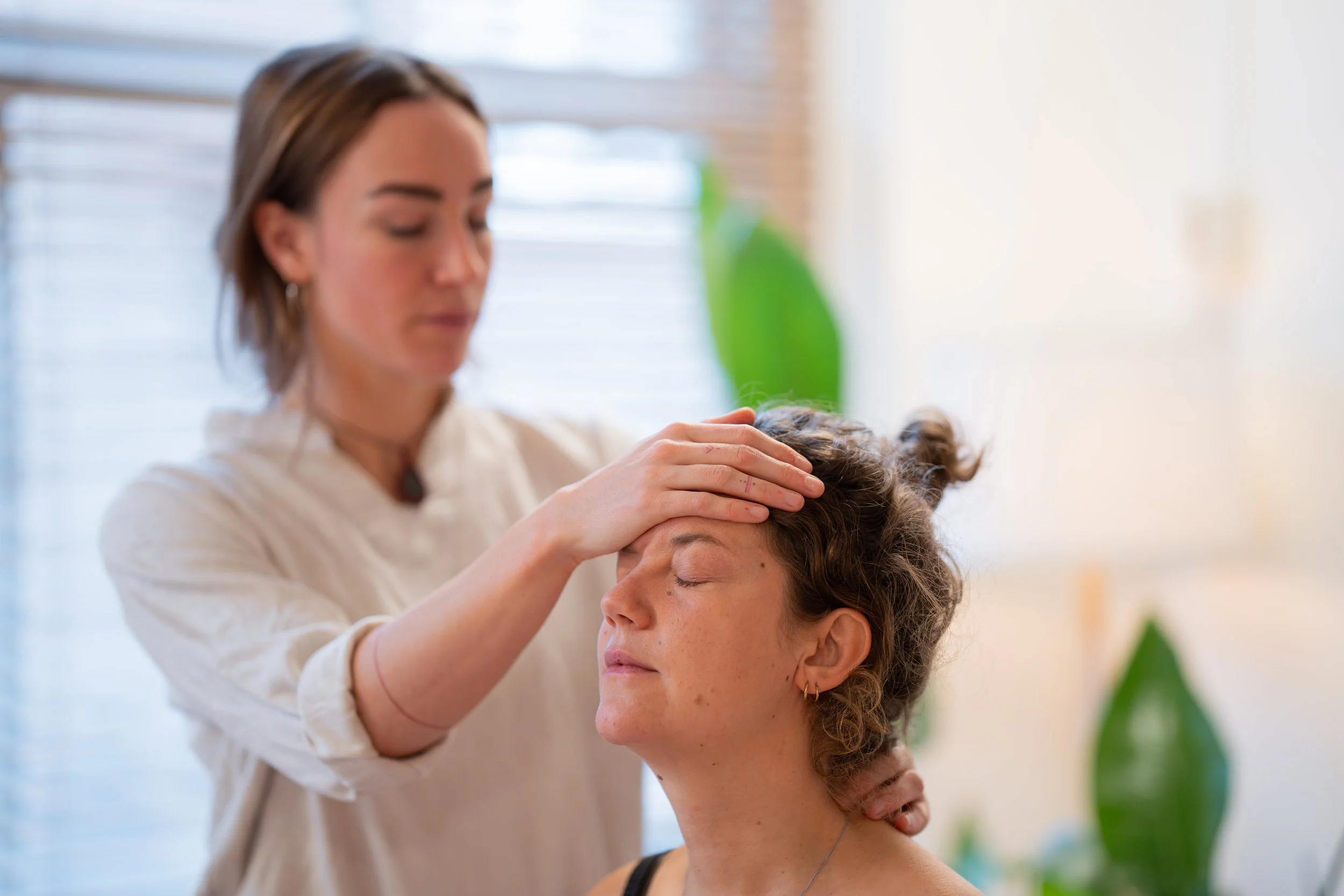
The Grinberg Method is a bodywork approach that teaches you through the body.
Developed by Avi Grinberg in the 1980s, the Grinberg Method is a body-based learning practice that works with touch, breath, movement, verbal guidance and focused attention to help you become aware of the patterns your body has built over time. Mental, emotional, physical and behavioral patterns that once made sense, but may now be holding you back. it's a method that teaches you to recognise the patterns keeping you stuck, and to experience something different instead.
It isn't a massage, and it isn't therapy. The goal isn't to fix you, it's to help you learn how you can heal yourself. You'll be asked to pay attention to physical sensations, your breath and the way energy moves or gets stuck. Between sessions, you'll often be given simple practices to continue on your own, so the learning becomes part of daily life.
Most people who come to the Grinberg Method have tried other therapies. They've talked about and analysed what's going on, but haven't yet worked with it in their body. This method offers something different: a way to learn directly from your own experience. Whether you're dealing with pain, exhaustion, anxiety, or the sense that something keeps repeating. The work starts here, with your body, and moves from there.
It is a practical and personal approach where lasting change comes from what you learn and experience yourself.
-
1. assessment (first session)
During the first session, we’ll take about 30 to 40 minutes for an assessment. We’ll start by defining the aim of the process together.You begin by sharing how you feel, what you’d like to work on, or what is currently present in your body or your life. I will also do a foot analysis, where I look at and touch your feet. This helps me assess and clarify the direction of the process and adapt it specifically to you.
1.2 assessment (follow up sessions)
During the follow up sessions we will talk 5 minutes at the start about how it is going and if something changes in the focus and the patternwe are working on.2. Body attention and guidance
You are guided to bring attention to specific sensations and areas in your body—such as tension, pain, breathing patterns, or areas of discomfort and numbness.3. Touch and physical, emotional and mental feedback
I will use touch on different parts of the body to help you become more aware of how you hold tension or patterns physically, emotionally and mentally.4. Breath and movement exploration
You may be invited to change your breathing, make small movements, or try different responses to sensations. This is to observe how your body reacts and what changes when you shift attention or behavior.5. Learning and integration
The goal is not only to reduce symptoms, but to help you recognize patterns and learn how to respond differently in daily life.In short, a Grinberg session is an active process of learning through the body, where awareness, attention, and physical experience are used to create lasting change over time.
-
The first session is 90 minutes. This includes an intake assessment and after that I will already work on the body. Follow up sessions are 60 minutes.
-
the first session is 90 euros and the follow up session are 75 euros.
-
The session will be in undergarments, so I can work directly on your skin. So wear undergarments you feel comfortable in. If we want to be more dressed this is also possible. wear something comfortable.
-
The length of the process can’t be determined in advance, but a noticeable change is often experienced within the first eight sessions. The overall duration depends on factors such as how long and how intensely the issue has been present, how deeply it is ingrained in the body, your age, and your involvement in the process.
-
You don’t have to prepare anything before the sessions, however you can take the follow points in mind:
The process is based on our cooperation, and so you have a major role in its success.
• To start with, give yourself the best conditions to get the most out of the session: come ready to involve yourself, don’t eat a heavy meal right before, and most importantly allow for a little extra time before and after the session.
• The more you pay attention, and share with me, how your body is between sessions, the quicker your body attention will grow and the sessions will be adapted to follow your body. This includes any outstanding changes in your physical condition, sleep, appetite, digestion, vitality, etc.
• To establish the outcome of every session and the process as a whole, integrate what you have learned in the working room in your day-to-day life. -
It is not intended for life-threatening conditions or serious illnesses that require immediate medical care.
It is not suitable as a replacement for medical or psychiatric treatment.
People with acute medical conditions (e.g. infections, severe pain of unknown origin, recent injuries) should first consult a physician.
It is not appropriate for severe psychiatric conditions that require clinical supervision.
It should not be used instead of prescribed medication or treatment.
Any ongoing treatment or medication should continue as directed by a doctor.
In general, the Grinberg Method works best for people who are medically stable and able to actively participate in a body-oriented learning process.
-
The Grinberg Method isn’t about “treating” or fixing something, but about learning through the body. The benefits people often experience tend to come from that shift in awareness and practice:
A stronger connection to your body and how it responds
More awareness of habits, patterns, and tension you usually don’t notice
The ability to stop or change reactions that don’t serve you
Less unnecessary tension and more ease in movement and breathing
More energy and a clearer sense of what’s going on in your body
Better focus and presence in daily life
A greater sense of choice in how you respond to situations
Over time, it can help you become more attentive and responsive to yourself, rather than running on automatic patterns. The exact benefits can look different for everyone, depending on what you bring into the process and how you work with it.
Massage Therapy
-
Massage therapy is the practice of working with the body through touch. By applying pressure and movement, it helps release tension, improve circulation, and support the body’s natural ability to restore itself.
But for me, it’s more than just working on muscles.
Massage is a conversation between my hands and your body. It’s a way of listening. Your body is constantly giving signals: where it’s holding, where it’s tired, where it wants attention. In a session, I follow those signals.
I don’t work with a fixed routine, because no two people—or even two days—are the same. Each session is shaped in the moment. Sometimes the work goes deep into the muscles, sometimes it becomes slower and more subtle. Sometimes we focus on movement, breath, or simply creating space for you to relax.
My intention is to create a place where you can relax, feel safe, and reconnect with yourself. Not just physically, but as a whole. By combining a range of techniques and approaches, I create a treatment that supports both physical release and deeper bodily awareness.
-
During a session, I use a range of techniques — including touch, movement, breathing, and verbal guidance — to support the aim you came with. There is no fixed routine or structure; each session is tailored to your needs in the moment.
I mainly focus on the areas related to your goal and work with them in the way I believe will be most effective and best suited to you.
-
You can book a session for 60, 75, 90 or 120 minutes.
-
60 minutes: 85 euro
75 minutes: 100 euro
90 minutes: 115 euro
120 minutes: 145 euro -
You will be on the table in your underwear or naked, depending on what feels most comfortable for you. The areas I am not working on will always remain covered with a towel, so please wear or bring whatever helps you feel at ease.
-
How many sessions are needed depends on your aim. Some people come simply for relaxation, in which case one session may already be enough. If your goal is something more specific, such as relieving pain, tension, or long-term discomfort, multiple sessions are usually needed to achieve results.
-
There is no special preparation needed for a session. It can help to wear comfortable clothing and avoid eating a heavy meal right beforehand. You are also welcome to share any physical complaints, injuries, or specific goals before we begin, so the session can be tailored to your needs.
-
Massage therapy is not suitable in every situation. Please let me know before the session if you have any injuries, medical conditions, or health concerns. In some cases, massage may need to be adapted or postponed.
Contraindications can include:
Fever, flu, or contagious illnesses
Recent injuries, fractures, or surgeries
Inflammation or acute pain
Skin infections, open wounds, or rashes
Severe cardiovascular conditions or uncontrolled high blood pressure
Blood clots or thrombosis
the first 12 weeks of pregnancy
Serious medical conditions such as cancer or osteoporosis
If you are unsure whether massage therapy is appropriate for you, it is always best to consult your doctor or get in touch beforehand to discuss your situation.
-
Massage therapy has many benefits that can support you overall well-being. some of them are:
Emotional
Reduces stress and anxiety
stimulates emotional releaseMental
Calms the mind
Improves focus and promotes better sleep
Physical
Relieves muscle tension and soreness
Improves circulation and flexibility
Speeds up recovery from workouts or injuries
Reduces pain and stiffness
Enhances the quality of breathingOverall
Encourages body awareness
Helps to feel more energized
Promotes to feel more relaxed, grounded and present
Footwork
-
Footwork is an approach that focuses on the feet as a gateway to the entire body. In the session I combine techniques from Massage Therapy and The Grinberg Method. Working with the feet offers a direct and effective way to influence the whole body, encouraging a more grounded, stable, and relaxed way of moving through life.
-
A footwork session focuses on the feet and ankles, using different forms of touch and movement to work on the areas of the body connected to your aim. The session is tailored to your needs and can help support relaxation, body awareness, mobility, and the release of tension throughout the body.
-
A footwork session will last 60 minutes.
-
85 euro.
-
You will remain fully dressed during the session, so wear something that you feel comfortable in. If you want you can also be covered by a blanket for extra comfort.
-
How many sessions are needed depends on your aim. Some people come simply for relaxation, in which case one session may already be enough. If your goal is something more specific, such as relieving pain, tension, or long-term discomfort, multiple sessions are usually needed to achieve results.
-
There is no special preparation needed for a session. It can help to wear comfortable clothing and avoid eating a heavy meal right beforehand. You are also welcome to share any physical complaints, injuries, or specific goals before we begin, so the session can be tailored to your needs.
-
footwork is not suitable in every situation. Please let me know before the session if you have any injuries, medical conditions, or health concerns. In some cases, massage may need to be adapted or postponed.
Contraindications can include:
Fever, flu, or contagious illnesses
Recent injuries, fractures, or surgeries
Inflammation or acute pain
Skin infections, open wounds, or rashes
Severe cardiovascular conditions or uncontrolled high blood pressure
Blood clots or thrombosis
the first 12 weeks of pregnancy
Serious medical conditions such as cancer or osteoporosis
If you are unsure whether massage therapy is appropriate for you, it is always best to consult your doctor or get in touch beforehand to discuss your situation.
-
Working with the feet can support both physical, mental and emotional wellbeing. Possible benefits include:
Reduced tension and stress, calms the mind, improved body awareness, better posture and balance, relief from physical discomfort, emotional release, improved overall flexibility, enhanced quality of breathing, increased energy levels and a deeper sense of relaxation, grounding, and presence.